

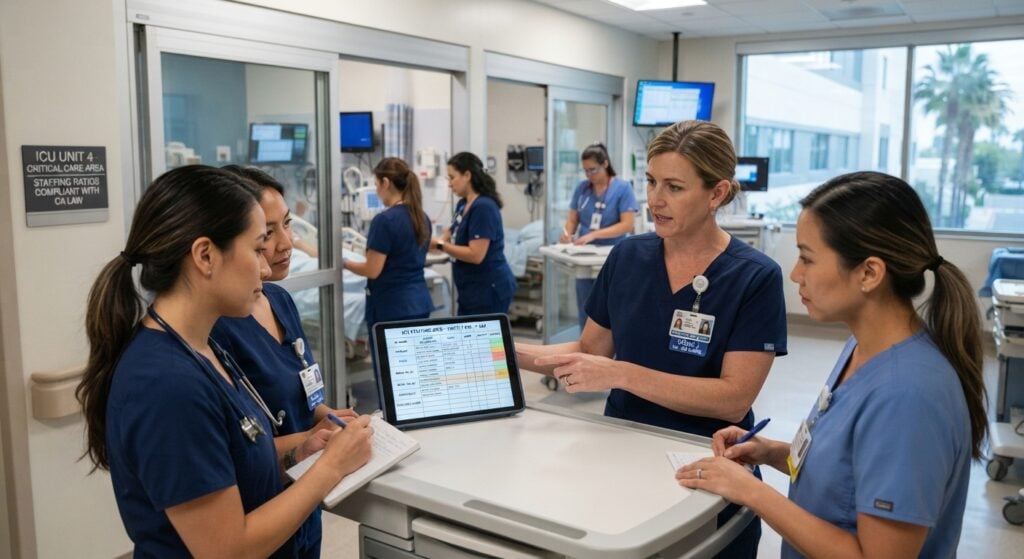
High-acuity units leave zero room for delay or compromise on clinical expertise. When Intensive Care Unit (ICU) census levels spike—whether driven by seasonal surges, unexpected severe acuity cases, or permanent staff turnover—hospital leadership faces an immediate strain. Maintaining mandatory nurse-to-patient ratios while avoiding burnout among your core team requires a clear, proactive strategy.
For Chief Nursing Officers (CNOs), ICU Nurse Managers, and Healthcare HR Directors in California, partnering with a specialized medical staffing partner provides a reliable path to securing high-caliber clinical talent without sacrificing standards.
The Hidden Costs of ICU Staffing Deficits
When an ICU is short-staffed, the consequences extend far beyond overtime pay on a balance sheet:
- Core Staff Burnout: Constantly asking permanent RNs to cover extra 12-hour shifts leads to fatigue, moral injury, and increased turnover—compounding the shortage over time.
- Ratio Non-Compliance: California law strictly mandates a 1:2 nurse-to-patient ratio in ICUs (and 1:1 for trauma or high-acuity patients). Falling out of compliance creates regulatory exposure and safety risks.
- Operational Bottlenecks: A shortage of ICU beds or staff forces emergency departments to board critically ill patients, disrupting patient flow throughout the entire facility.
Why Rapid Deployment Matters in Critical Care
Unlike non-acute units where shifts can occasionally be reshuffled, an open shift in an ICU requires immediate, experienced coverage. Rapid-response contract and travel ICU nurses allow hospital leadership to:
- Stabilize Acuity Levels Instantly: Deploy pre-vetted RNs who can step straight onto the floor and manage complex mechanical ventilation, continuous renal replacement therapy (CRRT), and advanced hemodynamic monitoring.
- Protect Permanent Staff: Provide relief to your full-time team, preserving morale and maintaining high retention rates across core units.
- Scale Up during Surges: Adjust staffing levels fluidly to match seasonal respiratory surges or sudden regional demand spikes.
Verifying Competency: What to Look for in Credentialed ICU Contractors
Not all agency staff are equipped for high-acuity critical care environments. When evaluating prospective ICU nursing talent, healthcare leaders should insist on candidates who meet rigorous credentialing criteria:
- Active California RN Licensure: Unencumbered state licensing and active standing with the California Board of Registered Nursing.
- Advanced Certifications: Current ACLS (Advanced Cardiac Life Support), BLS, and preferred CCRN (Critical Care Registered Nurse) credentials.
- Proven Clinical Experience: A minimum of 1–2 years of recent experience in a fast-paced, high-acuity ICU setting.
- Facility-Specific Familiarity: Pre-screened experience with major electronic health record (EHR) platforms (such as Epic or Cerner) to ensure rapid onboarding and minimal orientation lag.
Partnering for Patient-Centered Success
Managing ICU capacity in California’s dynamic healthcare environment demands flexible, high-caliber resources. By leveraging contract-to-hire, temporary, or per-diem ICU nursing solutions, hospital administrators can maintain safe staffing ratios, safeguard their permanent workforce, and deliver consistent, life-saving care.
Looking for dependable ICU nursing talent in California?
Partner with Global Service Resources to connect with experienced, credentialed critical care nurses tailored to your hospital’s staffing needs.
Contact Global Service Resources to discuss customized ICU and acute care staffing solutions for your facility.
